
Vietnam's cashew processing and export strives to maintain its world-leading position
October 6, 2021 Market news
According to the Vietnam Cashew Association (Vinacas), the cashew industry is still facing many difficulties and challenges after 30 years of formation and development.
After 30 years of formation and development, Vietnam's cashew processing and export industry has gradually risen to the number 1 position in the world.
However, in the context of integration, the cashew industry is still facing many difficulties and challenges. This is the general assessment of businesses at the 30th anniversary celebration of the establishment of the Vietnam Cashew Association (Vinacas), held in Ho Chi Minh City, on the evening of November 23.
*30 years of cashew export milestones
According to Vinacas statistics, in 1990, when Vinacas was established, Vietnam began exporting cashew kernels with a volume of 286 tons, reaching a value of 1.4 million USD. By 1995, the export volume of cashew kernels had reached 15,000 tons, valued at 90 million USD.
Immediately after, in 1996, for the first time, the export value of cashew kernels reached the milestone of 110 million USD. In 2004, for the first time, the export volume of cashew kernels exceeded 105 thousand tons, equivalent to an export value of 436 million USD.
By 2006, for the first time, Vietnam surpassed India to rise to the number 1 position in the world for cashew kernel exports, reaching nearly 127 thousand tons, valued at 504 million USD.
From 2017 to now, Vietnam has become the number 1 cashew processing and import-export center in the world, accounting for more than 50% of raw cashew processing.
In 2020, despite being heavily affected by the COVID-19 pandemic, by the end of October 2020, cashew kernel exports still reached over 422 thousand tons, an increase of 12% compared to the same period in 2019, reaching 94% of the 2020 plan.
The export turnover for 10 months reached over 2.6 billion USD, down 3% compared to the same period in 2019, reaching 82.3% of the plan.
It is expected that in the whole year of 2020, cashew kernel exports will reach 450 thousand tons, valued at 3.28 billion USD. Thus, from 1990 to the end of 2020, cashew exports are estimated to reach over 4.6 million tons of cashew kernels, with a total estimated value of over 31 billion USD.
Mr. Pham Van Cong, Chairman of Vinacas, said that the greatest advantage of Vietnam's cashew industry is the world's most advanced processing technology produced by Vietnamese people.
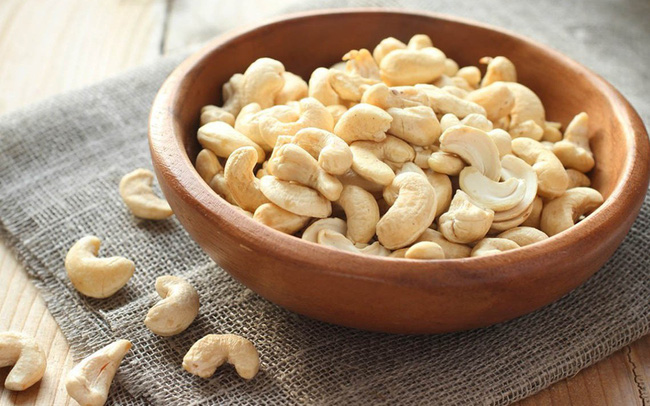 Since the formation of the cashew processing industry until now, technology and equipment have been continuously improved and innovated, so in a short time, the cashew industry has developed impressively.
"Especially in the past 10 years, thanks to the application of science and technology, mechanization, and automation, the cashew kernel processing industry has solved many issues previously raised such as labor shortages, environmental pollution to product quality management, especially the issue of ensuring food safety that importing countries are very concerned about. From a low starting point, lagging behind many countries, the cashew industry has become one of Vietnam's main agricultural export sectors. Now, when it comes to cashew nuts, importers from other countries all think of Vietnam," emphasized Mr. Pham Van Cong.
*Many challenges
Although it is at the top of the world, many entrepreneurs in the cashew industry recognize that Vietnam is only known for its number 1 position in processing and exporting cashew kernels, but most processing and exporting enterprises are small and micro-sized.
In the global cashew value chain, Vietnam mainly exports semi-processed cashew kernels at a price of 10USD/kg, while finished cashew kernels sold in supermarkets in other countries are priced at about 30USD/kg.
Thus, Vietnam only accounts for 30% of the cashew industry's value chain, with the remaining value belonging to international distributors and roasters.
Vietnam also has not been proactive in sourcing raw materials, having to import most raw cashews for processing, mostly from Africa. Meanwhile, all import-export transactions must go through intermediaries, so they are always passive in terms of price.
Mr. Nguyen Minh Hoa, Vice Chairman of VINACAS, said that currently, Vietnam's cashew kernel processing and export industry is under great pressure from new policies of cashew-producing and processing countries.
If African countries start developing domestic processing instead of exporting raw materials, India, one of the largest cashew kernel consumption markets in the world, which is a counterbalance to Vietnam, is applying tax policies to limit the amount of cashew imports, mainly from Vietnam.
With the Chinese market, which is considered "easy-going" but is now tightening the quality of agricultural products through unofficial channels, if the quality is not improved, Vietnamese cashews will find it very difficult to enter this vast market.
Meanwhile, European and American countries are also raising food safety standards for cashew kernels imported from Vietnam.
Experts believe that these market demands are challenges but also opportunities to help Vietnam's cashew industry restructure to adapt, improve equipment, technology, and enhance management capacity; at the same time, move towards deep processing, increasing the level of control in the cashew industry's value chain.
Therefore, the cashew industry needs a methodical strategy to increase the value of cashew nuts, shifting from semi-processing cashew kernels and exporting semi-finished products to finished processed products, directly entering supermarkets.
Mr. Pham Van Cong said that to help the cashew industry take advantage of opportunities, overcome difficulties and challenges, Vinacas is promoting the development and proposing to the Government the issuance of the "Vietnam Cashew Industry Development Strategy in the New Situation".
Accordingly, proposing state policies to strongly develop deep processing, meet the diverse needs of the world market, and gain a worthy position in the global cashew value chain. Besides, strongly developing raw material areas towards quality and efficiency; creating a proactive position for quality raw materials for processing, while contributing to the successful implementation of the agricultural policy.
Mr. Nguyen Trong Thua, Deputy Minister of Home Affairs, said that to develop the cashew industry sustainably and maintain a stable cashew planting area, it is necessary to focus on improving the income of cashew farmers.
Specifically, it is necessary to improve the productivity and quality of cashew gardens, renovate low-yield cashew gardens.
For processing, it is necessary to promote deep processing activities, maintain competitiveness in terms of quality and price in the context of global trade facing many difficulties.
In the future, the cashew industry needs to review and comprehensively assess opportunities and challenges to have an effective production, processing, and trade plan.
Meanwhile, many businesses share that improving enterprise management capacity and market forecasting are issues that Vietnam's cashew processing and export enterprises need to improve immediately to grasp market rules and have a production and business strategy suitable to market needs.
